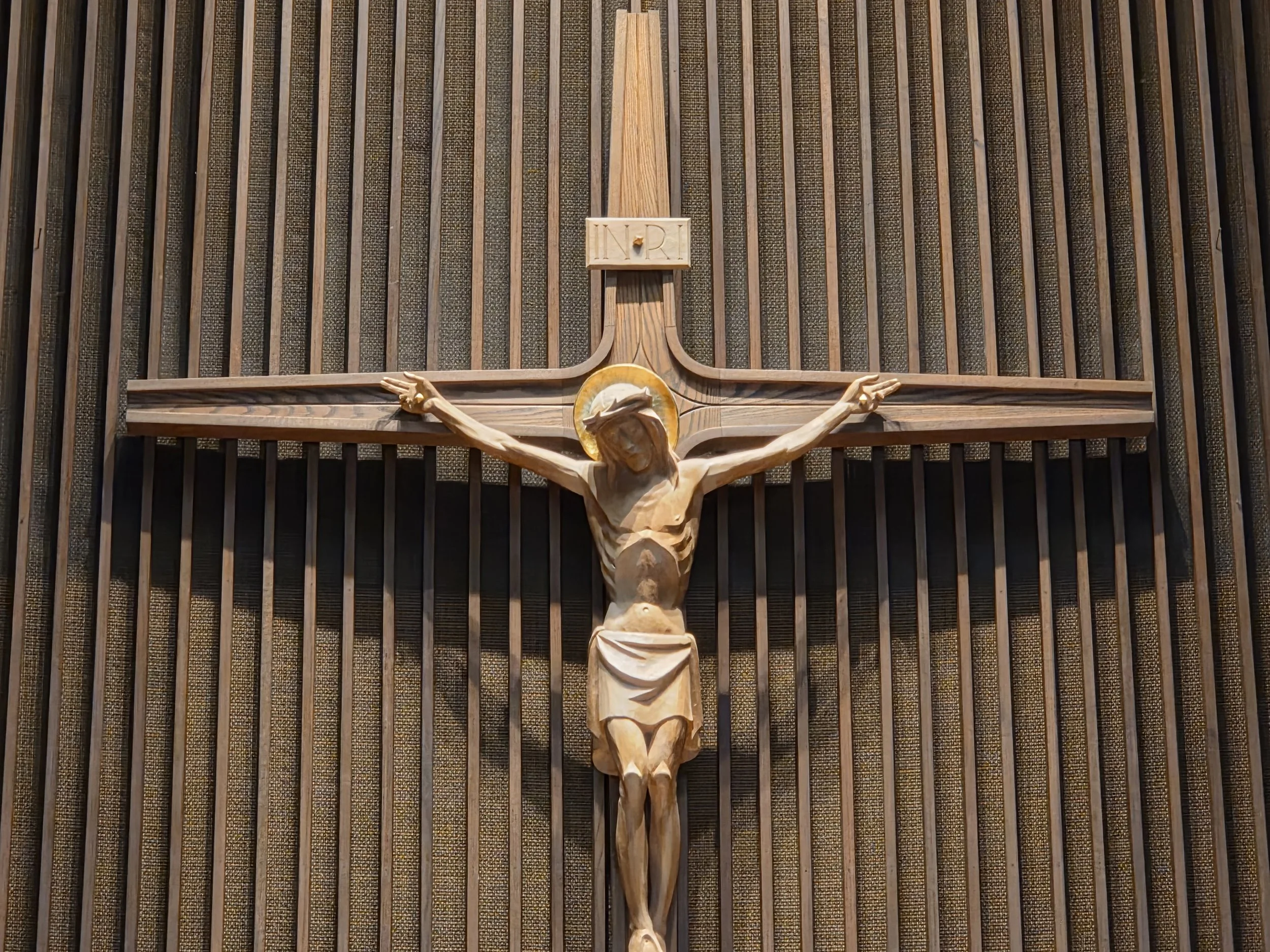
Reconciliation/Confession
Confession Times
Tuesday - 5-6 pm
Saturday - 8-9 am & 3-3:45 pm
“[Jesus] said to them [the Apostles] again, ‘Peace be with you. As the Father has sent me, so I send you.’ And when he had said this, he breathed on them and said to them, ‘Receive the holy Spirit. Whose sins you forgive are forgiven them, and whose sins you retain are retained.’”
- John 20:22-23
On Easter night, Jesus appeared to the Apostles (minus St. Thomas), greeted them with peace, and breathed on them the Holy Spirit to forgive sins. “The Creed links ‘the forgiveness of sins’ with its profession of faith in the Holy Spirit, for the risen Christ entrusted to the apostles the power to forgive sins when he gave them the Holy Spirit” (Catechism of the Catholic Church, 984).
Sins committed before Baptism are forgiven through the Baptism. Sins committed after Baptism are normally forgiven in the Sacrament of Reconciliation. Sins wound our relationship with God and others and harm our human dignity. Faith reveals to us how destructive sin is in our lives and the world.
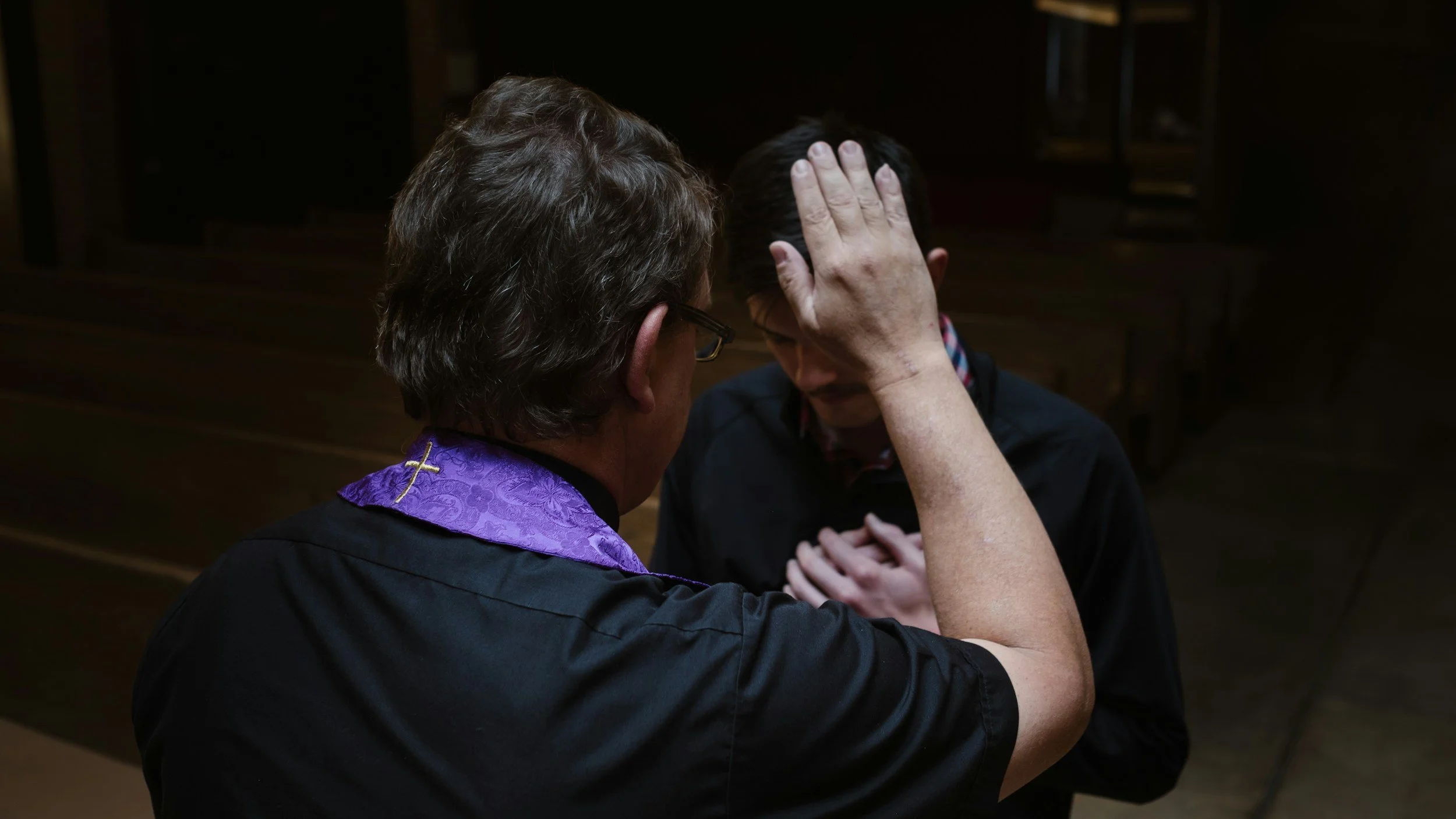
The pathway back to God after sin is a process of conversion that it initiated by God’s grace. The return to God includes sorrow for sin and the resolve to sin no more. In the Sacrament of Reconciliation, the acts of the person receiving forgiveness are contrition, confession, and satisfaction. The act of the priest is absolution for the sins of the person confessing.
How does it work?
The penitent, after an examination of conscience, needs to confess all mortal sins. While it is not necessary to confess venial sins, the Church strongly recommends this practice. The priest then proposes a penance to the penitent to repair the harm due to sin. Individual confession of grave sins according to kind and number to best of one’s ability is the ordinary way of receiving absolution and reconciliation with God and the Church.
The effects of the sacrament of Reconciliation includes being made right with God and the Church, peace of conscience, spiritual consolation, the remission of eternal punishment due to mortal sin as well as some degree of temporal punishments, and a greater power to face spiritual challenges.
Second Grade First Reconciliation
Children in second grade prepare for their First Reconciliation as part of their formation for First Holy Communion. Formation begins in the fall of second grade. For the requirements for second grade First Holy Communion, please go to the Eucharist page Link. On requirement of the preparation program is that the child must be either in a Catholic school or Discipleship Formation with the parish.
Second Grade First Reconciliation Contact
Lisa Kuhn
920-337-2330 (Her office is at St. Mary in Ledgeview)
Adults for First Reconciliation
For a non-Christian adult you will receive the Sacrament of Reconciliation after your Baptism when you commit personal sins that need to be forgiven. Baptism washes away both Original and personal sins and hence one cannot even receive Reconciliation until one is baptized. You would still go through the process of the Order of Christian Initiation for Adults formation (OCIA)
For a non-Catholic Christian adult you receive the Sacrament of Reconciliation prior to the Easter Vigil. This occurs at the end of OCIA formation.
For non-Christians and non-Catholic Christians who are seeking to enter the Catholic Church, please go to the Become Catholic page and fill out the form. Link
For a Catholic adult who has not received First Reconciliation, please contact Father Jason so as to discern what formation is needed.