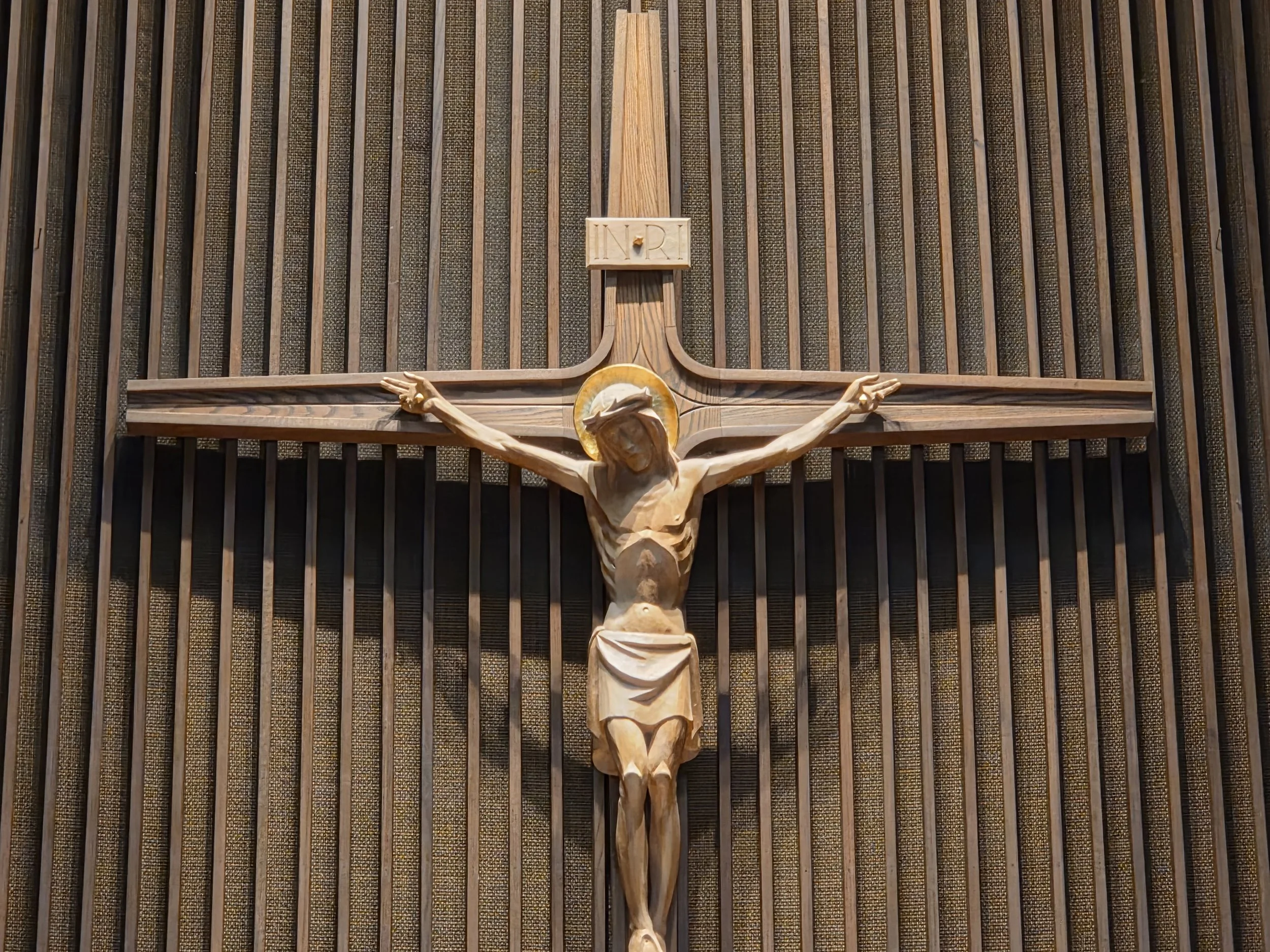
Eucharist/the Mass
Weekend Mass Times
Saturday - 4 pm
Sunday - 9 am & 11 am
Weekday Mass Times
Tuesday - 7:30 am
Wednesday - 8:30 am
Thursday - 7:30 am
Friday - 7:30 am
Saturday - 7:30 am
“For I [Paul] received from the Lord what I also handed on to you, that the Lord Jesus, on the night he was handed over, took bread, and after he had given thanks, broke it and said, ‘This is my body that is for you. Do this in remembrance of me.’ In the same way also the cup, after supper, saying, ‘This cup is the new covenant in my blood. Do this, as often as you drink it, in remembrance of me.’ For as often as you eat this bread and drink this cup, you proclaim the death of the Lord until he comes.”
- 1 Corinthians 11:23-26
Jesus instituted the Eucharist at the Last Supper. It is the source and summit of the Christian life. It is the highest form of worship of God through Jesus Christ by the power of the Holy Spirit.
The Eucharist is a memorial of Christ’s saving life, death, and Resurrection, re-presented for our salvation through the ritual of the Catholic Church.
Jesus, acting through the ministry of the priest, is both the priest offering the sacrifice and the victim being sacrificed. Only a validly ordained priest can lead the Eucharist and consecrate the bread and wine so that they become the Body and Blood of Christ. The essential signs of the Eucharist are wheat bread and grape wine. At the Eucharist, the consecrated bread is Christ’s Body. The consecrated wine is Christ’s Blood. The whole of Jesus Christ is fully present under each form of the Eucharist. He is substantially present in a real and entirely unique way. This happens by the power of the Holy Spirit.
As sacrifice, the Eucharist is offered in reparation for the sins of the living and the dead and to obtain spiritual and worldly benefits from God.
The fruits of Holy Communion includes a deeper connection with Jesus Christ, a closer identification with all the baptized, a commitment to the poor, and a pledge of future glory.
Once Holy Communion has been distributed, the remaining hosts are placed in the tabernacle to provide Communion for the sick and dying and also to provide opportunity for prayer and worship before Christ in his Real Presence.
What to expect at the Eucharist?
Please go to our Come and Visit page for what to expect. Link
Who can come to Eucharist?
Anyone of good will. Catholic. Non-Catholic Christian. Non-Christians can come and worship at the Eucharist.
Who can receive Holy Communion?
Holy Communion is only open to those Catholics who have received their first Holy Communion. While Holy Communion cannot be offered to everyone, all are part of the worshiping community whether they can receive at this time or not.
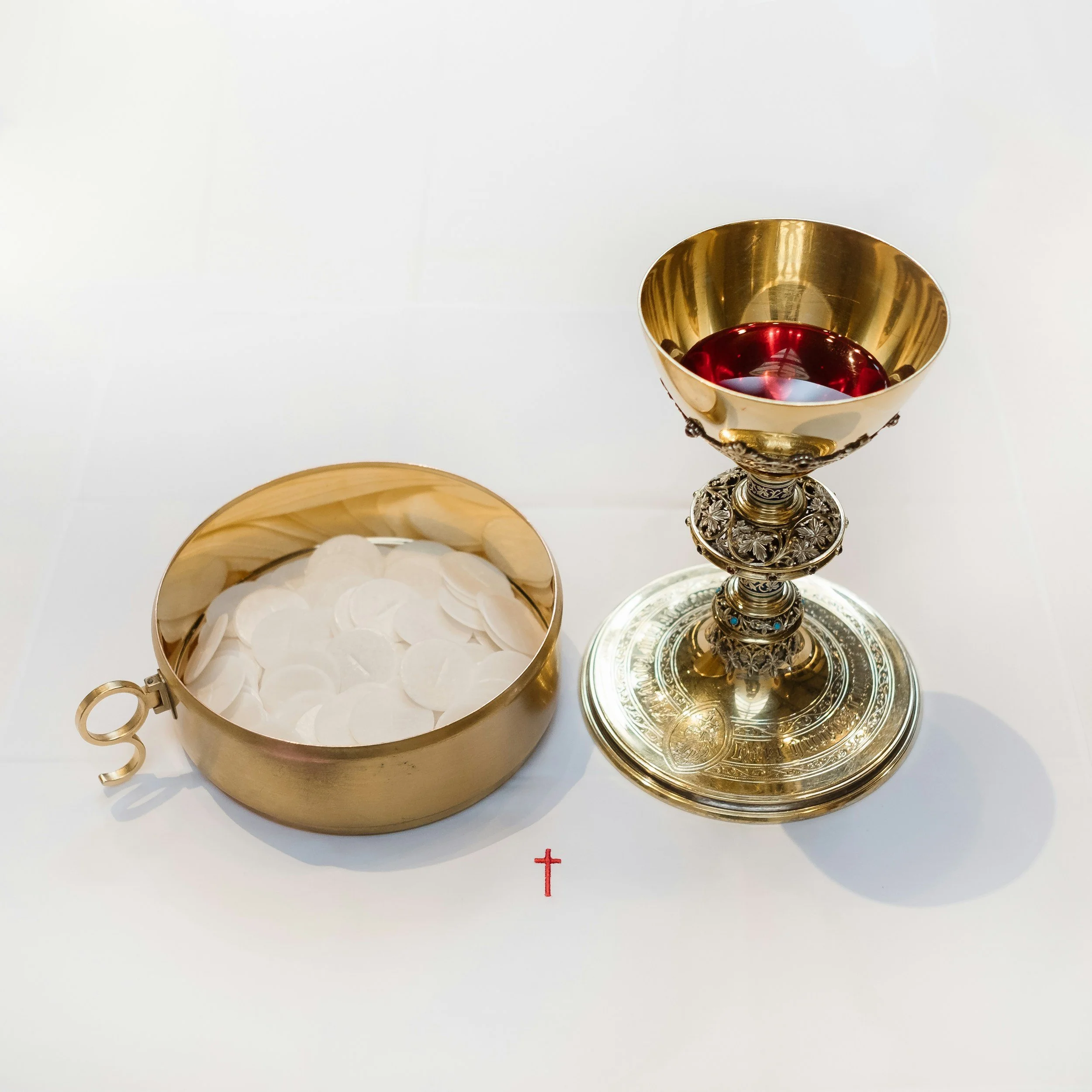
Second Grade First Holy Communion
Children in second grade prepare for their First Holy Communion through classes. Formation begins in the fall with preparation for First Reconciliation with First Holy Communion during the Easter Season in the Spring. The following is required for First Holy Communion in second grade:
attending either a Catholic school or Discipleship Formation with St. Francis Xavier Parish.
have gone through preparation and having received First Reconciliation.
attend the Bread Mass in January. The Bread Mass is when the child offers a loaf of bread to a parishioner at the Mass who then prays for the child’s successful journey to First Holy Communion.
attend the parent meeting with the child following the Bread Mass.
attend the First Holy Communion retreat in March or April.
Second Grade First Holy Communion Interest Form
Please fill out the following form if you are interested in First Holy Communion for your child in second grade.
Second Grade First Holy Communion Contact
Lisa Kuhn
920-337-2330 (Her office is at St. Mary in Ledgeview)
Adults for First Holy Communion
If you are not Christian or a non-Catholic Christian adult you receive the Sacrament of Eucharist on the Easter Vigil. This occurs at the end of the Order of Christian Initiation for Adults formation (OCIA).
For adults seeking Eucharist, non-Catholics, please go to our page on Becoming Catholic and fill out the form there. Link If you are Catholic and would like to receive First Holy Communion as an adult, please contact Fr. Jason.
Guidelines for the United States Conference of Catholic Bishops on Who can Receive Holy Communion
For Catholics: As Catholics, we participate fully in the celebration of the Eucharist when we receive Holy Communion. We are encouraged to receive Communion devoutly and frequently. In order to be properly disposed to receive Communion, participants should not be conscious of grave sin and normally should have fasted for one hour. A person who is conscious of grave sin is not to receive the Body and Blood of the Lord without prior sacramental confession except for a grave reason where there is no opportunity for confession. In this case, the person is to be mindful of the obligation to make an act of perfect contrition, including the intention of confessing as soon as possible. A frequent reception of the Sacrament of Penance is encouraged for all.
For Our Fellow Christians: We welcome our fellow Christians to this celebration of the Eucharist as our brother and sisters. We pray that our common baptism and the action of the Holy Spirit in this Eucharist will draw us closer to one another and begin to dispel the sad divisions which separate us. We pray that these will lessen and finally disappear, in keeping with Christ’s prayer for us “that they may all be one” (John 17:21). Because Catholics believe that the celebration of the Eucharist is a sign of the reality of the oneness of faith, life, and worship, members of those churches whom we are not yet fully united are ordinarily not admitted to Holy Communion. Eucharistic sharing in exceptional circumstances by other Christians requires permission according to the directives of the diocesan bishop and the provision of canon law. Members of the Orthodox Churches, the Assyrian Church of the East, and the Polish National Catholic Church are urged to respect the discipline of their own churches. According to Roman Catholic discipline, the Code of Canon Law does not object to the reception of Communion by Christians of these Churches.
For Those Not Receiving Holy Communion: All who are not receiving Holy Communion are encouraged to express in their hearts a prayerful desire for unity with the Lord Jesus and with one another.
For Non-Christians: We also welcome to this celebration those who do not share our faith in Jesus Christ. While we cannot admit them to Holy Communion, we ask them to offer their prayers for the peace and the unity of the human family.